.jpg)
Moving quickly towards ending a retrospective tax dispute with a firm that gave India its largest oilfield, the government has accepted Cairn Energy PLC's undertakings which would allow for the refund of taxes, sources said. Meeting the requirements of the new legislation that scraps levy of retrospective taxation, the company had earlier this month given required undertakings indemnifying the Indian government against future claims as well as agreeing to drop any legal proceedings anywhere in the world. The government has now accepted this and issued Cairn a so-called Form-II, committing to refund the tax collected to enforce the retrospective tax demand, two sources with direct knowledge of the development said.

While Mercedes-Benz India expects 25 per cent of its India sales to come from EVs in the next four years, BMW says it estimates around 10 per cent of sales to come from those in the near future.

It has always been accepted in various apex court rulings that economic policy is not justiciable. It can intervene only if the legislation is seen to violate fundamental rights says Sukumar Mukhopadhyay.

'Earlier-than-expected tapering from the US, followed by rate hikes, and locally, a potential third wave, which mimics the second wave in terms of severity.'

The remarks by the CJI came against the backdrop of the recent remarks by Vice President Jagdeep Dhankhar who questioned the landmark 1973 Kesavananda Bharati case verdict that gave the basic structure doctrine.

'Modi had not discussed demonetization with me prior to his announcement on 8 November 2016. 'I learnt of it along with the rest of the country. 'I was not surprised when he did not discuss the issue with me prior to making the public announcement. 'It fitted in with his style of making dramatic announcements.' A fascinating excerpt from Pranab Mukherjee's The Presidential Years: 2012-2017.

'We can go somewhere between 35 per cent and 40 per cent.'

From March 3, investors in India will be able to trade in select US stocks through the NSE International Exchange (NSE IFSC), a wholly owned subsidiary of the National Stock Exchange (NSE). Investors can invest in NSE IFSC receipts on US stocks, which will be in the form of unsponsored depository receipts (DRs). For a start, this will include DRs of 50 US stocks such as Apple, Alphabet, Amazon, Tesla, Microsoft, Morgan Stanley, Nike, P&G, Coca-Cola, and Exxon Mobil. Indian retail investors will be able to transact on the NSE IFSC platform under the Liberalised Remittance Scheme (LRS) limits prescribed by the Reserve Bank of India (RBI), which currently stand at $250,000 per year.
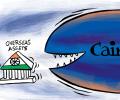
UK-based Cairn Energy PLC on Wednesday said it has agreed to drop litigations to seize Indian properties in countries ranging from France to the UK as it has accepted the Indian government's offer to settle tax dispute relating to the levy of taxes retrospectively. Meeting the requirements of new legislation that scraps levy of retrospective taxation, the company has given required undertakings indemnifying the Indian government against future claims as well as agreeing to drop any legal proceedings anywhere in the world. The government now has to accept this and issue Cairn a so-called Form-II, that will commit it to refund the tax collected to enforce the retrospective tax demand.

They have also called for giving cash to the poor, so that demand is generated in the economy.

RBML - the joint venture of Reliance Industries Ltd and supermajor BP - has told the government that fuel retailing for the private sector in India has become unsustainable after market-controlling public sector firms frequently froze petrol and diesel prices at rates way below the cost, sources said. Despite a surge in oil prices, state-owned Indian Oil Corporation (IOC), Hindustan Petroleum Corporation Ltd (HPCL) and Bharat Petroleum Corporation Ltd (BPCL) first froze petrol and diesel rates for a record 137 days beginning early November 2021 when five states including Uttar Pradesh went to the polls, and last month again went into a hiatus that is now 47 days old. "They (Reliance BP Mobility Ltd) has written to the petroleum ministry over the fuel pricing issue," a highly placed source in the government, who didn't want to be quoted, told reporters.
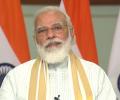
"The emphasis is on making every rule, law, policy people-centric, and public-friendly. This is the use of the new governance model and the country is getting its results," Prime Minister Modi said while speaking at the launch of a platform for 'Transparent Taxation -- Honoring the Honest'.

'I believe the modified scheme is much more beneficial and simpler.'
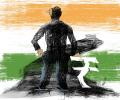
Eminent economist Arvind Panagariya has said India is on the cusp of returning to a high growth trajectory and voiced confidence that the country will become the world's third-largest economy by 2027-28. Currently, India is the fifth largest economy "so it's another five years.We are already in (the year) 2023. "So 2027-28, India should be the third-largest economy," Panagariya, Columbia University Professor and former Vice Chairman of NITI Aayog, told PTI in an interview in New York.

It will bear fruit in the next five years, which is why FDI is so strong. The foreigners clearly know what Indians don't, asserts T C A Srinivasa-Raghavan.

Mercedes-Benz India, BMW India and Audi India have lined up over 50 new model launches as they seek to recoup previous year's loss in volumes, reports Shally Seth Mohile.

But it is disappointing to note that Sitharaman's third Union Budget continues to promote a few problematic ideas, observes A K Bhattacharya.

Given the many policy areas where the Centre and the states have not been seeing eye to eye in the last few years, it is time the Modi government convenes a meeting of the Inter-State Council, recommends A K Bhattacharya.

Increasing the duties on auto parts and putting an additional cess on petrol and diesel could drive up costs of vehicles, specially where volumes are low and localisation is not viable.

Every patriot should learn from our history and recognise that celebrating size will neither negate nor obscure the huge economic challenges that India faces, asserts Rathin Roy.

The only real solution to the jobs crisis, whether in India or abroad, is to direct tech innovation towards job enhancing sectors, and disincentivising job-replacing ones, observes R Jagannathan.

While home-grown firms like Tata and Mahindra have been actively participating in the government's e-mobility mission, by launching electrified versions of their existing models, the global firms believe electric is not the best solution for a country where the primary source of power generation is coal, and where infrastructure is a big impediment.

Social activist Anna Hazare on Wednesday declared his support to West Bengal Chief Minister Mamata Banerjee, who apparently has ambitions outside the state in the coming Lok Sabha election, and snubbed his one-time protege by saying that he will not support Arvind Kejriwal.

To generate ample private sector interest, there is a need to introduce market-linked tariff rates.

The 15 ministers were sworn in on Sunday for the expanded Gehlot cabinet, fulfilling a key demand of former deputy chief minister Sachin Pilot whose rebellion last year shook the state's Congress government.
Some of the proposals include redrafting transfer and placement policy for IRS officers, strengthening the cadre restructuring, rebranding of IRS, robust deputation policy and creation of encadred post in other ministries and government department.

To ensure free, fair and transparent assembly elections next month in Punjab, the police have intensified search operations, especially in the border districts, to keep a vigil on illegal activities in vulnerable areas.

While the tax treatment does legitimise past crypto transactions, there is a possibility that any, or all, private cryptocurrencies will be banned in future.

India's economic image is not affected due to Adani Group's recent decision to pull out Rs 20,000 crore FPO (follow-on public offers) amid allegations of financial wrongdoings, Finance Minister Nirmala Sitharaman said on Saturday.

Investors expect more investment-friendly policies opening up more sectors for foreign direct investment

Anil Rego, CEO, Right Horizons, answers your personal income tax queries.

How do we get back to higher trend growth? The heart of the problem lies in private corporate investment, recommends Ajay Shah.

GST will make it easier for governments to spend more, says T C A Srinivasa Raghavan.

'On the road, you see only youth in Swiggy, Big Basket and Zomato uniforms.' 'Just now, I had a delivery from Amazon, and do you know what his qualification was? He was an engineering graduate!' 'The Ola driver who took me to the airport had an MCom degree. 'Where is the match between education and employment?'

How should one billion Indians, for whom deprivation has become an inescapable way of life, join us in celebrating 75 years of Independence? And where do we go from here? asks Kalyan Singhal.

Transparency is more than welcome, but govt should not look vindictive.

Indo-US bilateral trade will surge five times to $500 billion in the next few years on the back of growing cooperation between both the nations.

Cars priced above Rs 25 lakh account for 1 per cent in India's 3 million-car market and the share has remained unchanged over the last five years.

Growth in India will pick up from current levels, says LEO Puri, managing mirector, UTI Asset Management Company.
Expect a more modest out-turn of around 5 per cent (if not less) because of the longer-term scarring effects of the Covid shock, the sharply slowing growth in the pre-Covid years and some scepticism about the growth-efficacy of some of recent official policy initiatives, explains Shankar Acharya, former chief economic advisor to the government.
